
Volunteering: What the state can't replace
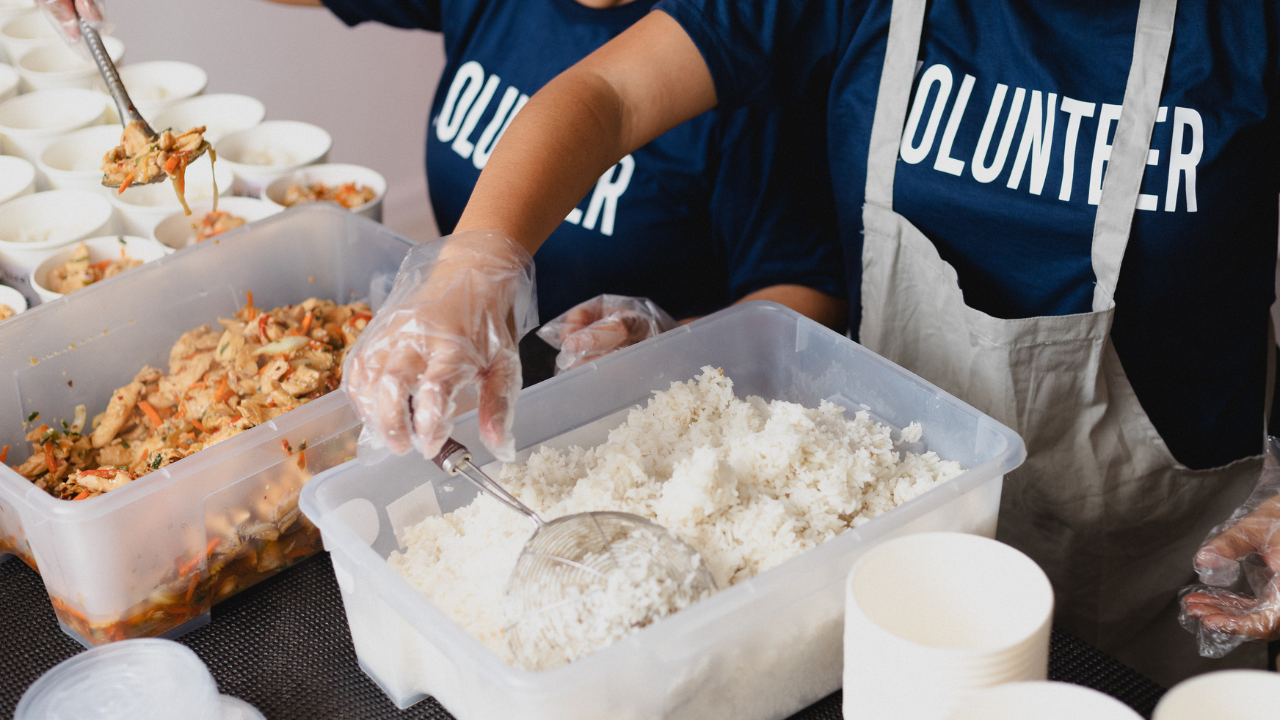
volunteering rates are the lowest on record. Do we care less about our communities and fellow citizens? Or have we simply handed the work of caring to the state? by david hughes.
First published in the MRC’s Watercooler newsletter. Sign up to our mailing list to receive Watercooler directly in your inbox.
At 7am on Friday I let myself into the MRC's Sydney office to write this newsletter, in need of inspiration. Unusually, I was not the first one in. An older lady was on our floor, unpacking food she had cooked at home. She volunteers next door, at a charity of parents who have lost a child, helping other parents survive the same loss. The food was for her fellow volunteers. Nobody pays them for work most of us could not face. They call themselves the Compassionate Friends.
Fifteen years ago there were more Australians like her. Volunteering has since fallen by a third, to the lowest rate on record, and we have 900,000 fewer volunteers than before the pandemic. My inspiration problem was solved, replaced by an uncomfortable question.
Do we care less about our communities and fellow citizens? Or have we simply handed the work of caring to the state?
While government can attend to our physical needs, it is incapable of meeting the personal needs and desires of individuals. Governments can deliver health services, transport and defence, but even the best governments have their limits. They cannot create the personal bonds that lead to happy and healthy communities.
What we value in a society is personal relationships, a sense of belonging and the compassion of our communities. Governments, and corporations, have only a limited capacity to attend to those needs in a meaningful way. It’s our altruistic spirit which bridges that gap and exemplifies the very best of civic duty.
Economists and policy experts focus on the marketplace and the state. In between these lies something more important — the community, the family and the individual.
Voluntary community organisations (like the Salvos, volunteer firefighters and churches) are essential to bridge the gaps of human need in our society. They attend to the needs of the soul and the spirit; not just the needs of our physical selves.
A study of 308,733 married couples found volunteers lived measurably longer than their non-volunteering spouses. Service, it seems, is good for the one who gives it, and what holds for a person holds for a country. Forget every other statistic that the ABS measures: the best test of any civilisation is how many men and women in it are prepared to do something, unselfishly, for other people.
The decline is steepest where it matters most for the future: 25 to 34 year olds are now the least likely Australians to volunteer, at 13.1 per cent, when a decade ago the ABS found teenagers the most likely of all. Volunteers are declining and getting older; with fewer shoulders comes a heavier load.
We are busier than ever, and online communities are replacing physical ones. But no online world can recreate the bonds formed from physical interaction, and none returns the same benefit to the person or the place.
Unsurprisingly, this has coincided with declining trust for our fellow Australians. The share of Australians who believe most people can be trusted dropped from 61 per cent to 50 in five years. Fire service volunteer numbers are down 16 per cent in a decade; when rivers broke their banks across South Australia and Victoria a fortnight ago there were fewer citizens on call to help their neighbours.
My friend Mark Fowler works as a lawyer for charities. His PhD traces how the 20th century nationalised compassion. Work that families, congregations and communities had done for centuries was absorbed into the welfare state, and what was once neighbourly became professional.
The data illustrates the extent to which compassion is now nationalised. Australia’s 53,641 registered charities took in $239 billion in 2024. Government accounted for close to half of it, providing $118 billion. Donations supplied $14.8 billion, one dollar in 16. The share of taxpayers claiming a deductible gift has fallen from 35 to 28 per cent in a decade.
We are nationalising the top of the sector and starving the community groups. Just 0.6 per cent of charities collect 57 per cent of the sector’s revenue. Large activist environmental charities grew the most. Our research found the top 25 environment charities in Australia more than doubled their revenue in less than a decade to $300 million.
It is the wrong direction, because the community sector is the best contract in public finance. A dollar delivered through a community organisation arrives with reinforcements no department can requisition: volunteer labour, local knowledge, and the standing that comes from not being the government. When Sacred Heart Mission in Melbourne submitted its homelessness program to a randomised trial, 62 per cent of participants were in permanent housing after three years against 28 per cent under standard services, and every dollar invested returned $1.84 in health and justice savings.
For every $1 invested by the community, $5 is returned. The key multiplier is the free labour of the volunteer.
Germany’s social code directs that where voluntary organisations can deliver a service, the state shall refrain from delivering it itself. The result is a welfare sector, led by Christian charities Caritas and Diakonie, employing more than one million people, and one million volunteer firefighters supported by a 356,896-strong youth wing. Notably, Germany does not lecture its young into service. It encourages a habit to form.
Governments cannot manufacture volunteers. They can only clear the ground on which volunteering grows, and stop taxing, regulating and crowding it out of existence.
We should begin where the decline is steepest, with the young. Australia already recognises service in pockets. We have the Duke of Edinburgh programme. And in Western Australia, 50 hours of community service can count towards the school leaving certificate. Universities including UNSW, Macquarie and La Trobe recognise sustained service in admissions and early offers. We should include structured volunteering in every senior secondary certificate and invite every university to weigh it as part of the admissions process. So that a year of turning out for the volunteer firefighters, the surf club or Meals on Wheels counts on the two pieces of paper young Australians are told matter most.
It is always better to incentivise and reward than to compel. Where service has been mandated, it can breed resentment rather than foster beneficial habits. Recognition is different. It is a country stating plainly what it values.
Beyond the school gate the reforms are no mystery. We should make volunteering cost nothing, through a simple tax-free allowance for volunteer expenses. And we should write the German principle into Australian law: where the community can, the state should not.
Question 53 in this month’s Census asked us how much time we spend doing unpaid volunteer work. Australia will answer fewer hours than ever. Our first response to every gap in Australian life cannot be “well, what is the government going to do about it?”.
This piece was prompted by a single interaction. Of all the people I passed on Pitt Street on Friday, the woman unpacking food next door was probably the only one not working or shopping. Amongst the bankers and public servants she is the keeper of our civilisation and deserves reinforcements.