
Australia is losing the race for investment
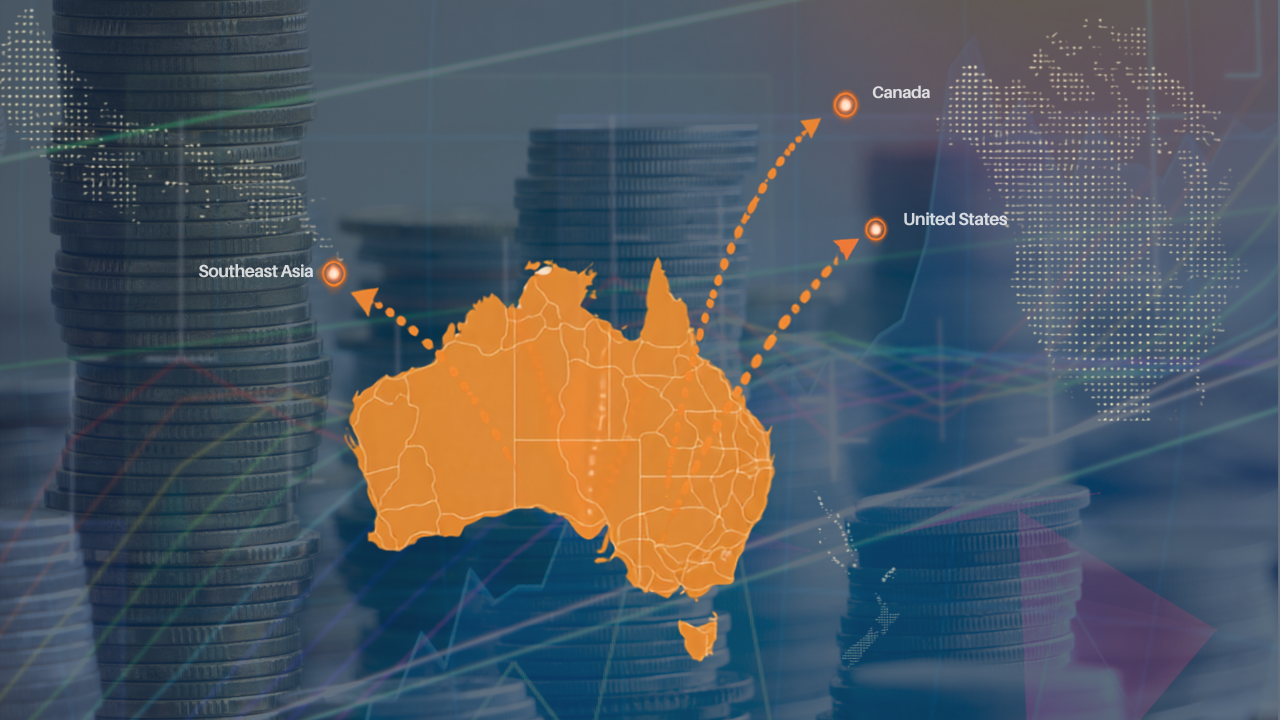
australia is no longer a favoured nation for investment. by david hughes.
First published in the MRC’s Watercooler newsletter. Sign up to our mailing list to receive Watercooler directly in your inbox.
Australia is blessed by its climate, geology and proximity to the world's fastest growing economies. Through hard work and discipline Australia has capitalised on these opportunities to become the envy of the developed world. Yet in 2026, Australia presents as the child born into privilege and wealth, now set on squandering its inheritance.
Once considered the benchmark for regulation and economic management, Australia is now at the bottom of the pack. We are no longer a favoured nation for foreign investment, and who can blame overseas investors when Australian companies are themselves hunting abroad for their next big investment?
Australians have a healthy obsession with how we measure up to other countries. Here are some sobering facts:
Australia ranks 38th out of 42 developed nations on a measure of investment restrictions.
Greece, Italy and New Zealand place fewer restrictions on investment than Australia.
The UK ranks 25 places above us; the US is 14 places ahead.
As a result, foreign investment in Australia fell by 33% in 2025. Across other developed economies foreign investment rose by 11%. Australia is missing out.
Australia needs foreign capital
We are a continent of just 28 million people trying to develop enormous mineral deposits, build new energy generation and transmission, construct data centres, expand factories and finance new businesses. We cannot fund all of that from Australian savings alone. And we never have. Without foreign investment, Australia would produce less, employ less and our incomes would be lower.
Foreign-owned companies are not the enemy of Australia's working class. Among our largest companies they pay almost 40 per cent of the company tax, more than $37 billion last year. That money builds schools, hospitals and roads.
While investors retreat from Australia, one industry here has never grown faster. That industry is government.
Government spending supports 40% of total employment.
Federal government employment grew 5.6% last financial year, while the population grew 1.6%. The bureaucracy is expanding three times faster than the country it administers.
Direct government spending — on services, wages and construction, across all tiers of government — has risen from about 21% of GDP in 2000 to about 29% today. As distinguished investor Charles Goode noted last week, “The government is the most consistent growth industry, and we are a forced investor in it through taxation.”
Growing the state is easy. Attracting capital is harder, and nowhere is our failure clearer than in the industry that built our prosperity: mining.
New mining investment fell 27% in the latest quarter, and the causes are neither mysterious nor accidental. It takes around 17 years to bring an Australian mine from discovery to production. We desperately need more gas, yet Woodside waited nearly seven years for a ruling on extending the North West Shelf.
Why investors shun Australia
On top of this, Australia's company tax rate is 30% against an OECD average of 24% and there are 181 countries with a lower headline income tax rate than Australia. If this wasn't enough of a deterrent, the Government's so-called Safeguard Mechanism is effectively a new carbon tax, which industry has to face on top of increasing regulations and a minefield of state taxes and royalties.
Imagine the shock when a foreign investor comparing Australia with Canada or the United States eventually discovers payroll tax. This tax was introduced in 1941 to fund wartime child endowment. Now 85 years after the war ended, the tax remains and raises about $25 billion a year across eight separate regimes, levied on the one activity every government claims to prize: giving someone a job.
Our regressive industrial relations system is another deterrent. Business has faced nine separate Acts amending Australia's workplace laws since 2022, from multi-employer bargaining to a crackdown on casual employment and now a new industrial court. Each came with fresh compliance obligations, but few came with any link to productivity.
All this begs the question. Why would anyone do business in Australia in 2026, when around 40 developed countries offer fewer restrictions, less regulation and lower tax?
The investors passing us over are not wrong, and that is what should trouble us most, because their verdict is on our policies rather than our potential. The geology, the workforce and the proximity to the world's growth are all still here. Australia does not need to beg for capital. It needs to stop repelling it.