
Is authenticity enough?
It’s the rarest commodity in politics, and only half of what governing requires. by david hughes.
First published in the MRC’s Watercooler newsletter. Sign up to our mailing list to receive Watercooler directly in your inbox.
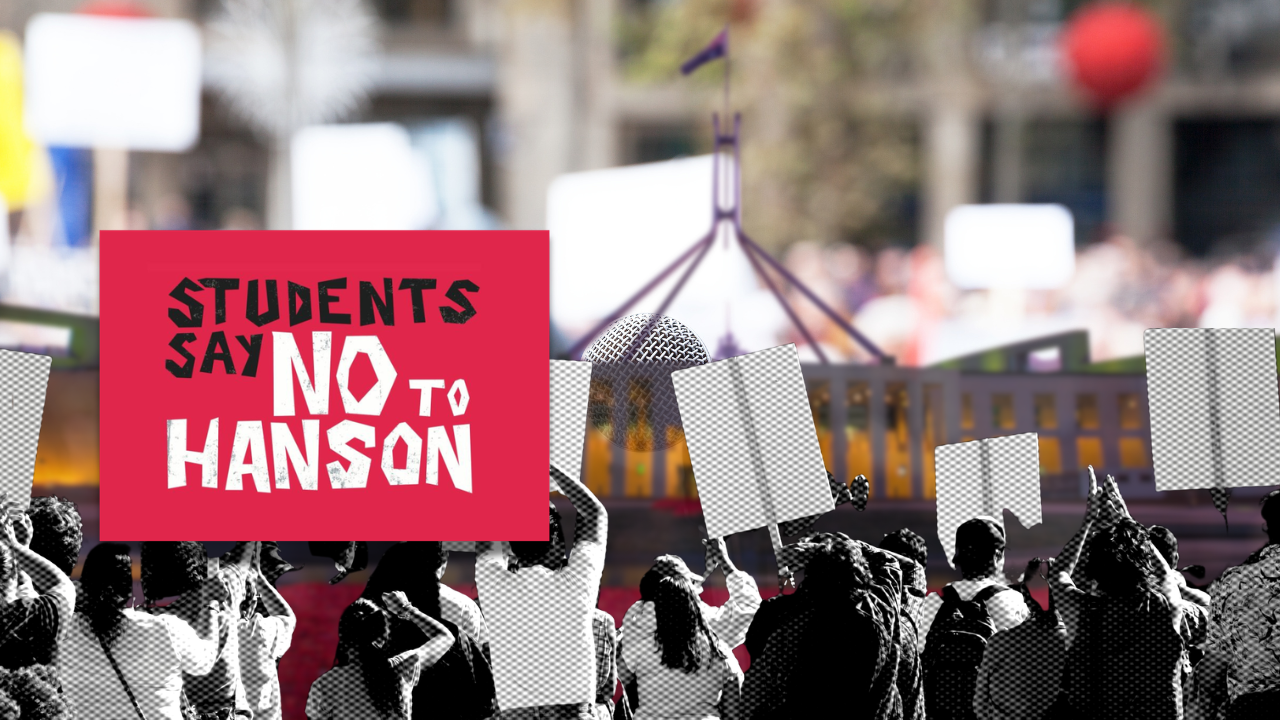
School students across the country walked out of class last Thursday to protest against One Nation. The organisers promised to build a movement that can “contest the far-right’s dominance”. They may accomplish the opposite. Nothing entrenches a protest vote like being told it is shameful. Support for Donald Trump only grew after Hillary Clinton consigned half his supporters to a “basket of deplorables”.
Three in ten Australians now park their vote with One Nation, and a movement of that scale is not an aberration to be lectured out of existence but a message to be read. Every leader in the country should study it, and so should Pauline Hanson, because it contains a warning for her as well.
I wrote in February that One Nation’s support is not a fringe protest but a constituency, and that it will not be won back by ridicule. What its voters seek is authenticity, principled positions derived from values, and decisive action in the national interest.
Pauline Hanson has the first part covered. She has been saying exactly what she thinks for the last 30 years. This has its appeal in an era when the government speaks in generalisms, deliberately crafted to have broad appeal and devoid of conviction.
Trust in government has fallen from 77 per cent in the 1960s to 16 per cent now, and One Nation’s vote is best understood as a symptom of that collapse rather than its cause. A third of the electorate has not turned extremist. It has concluded, on decades of evidence, that the political mainstream does not mean what it says.
But while authenticity is the best starting point, it is not a political end in itself. Being believed is not the same as being right, and saying what you think matters less than what you think and what you plan to do about it. Australians know Hanson’s positions; she has never hidden one in her life. What no one has yet seen is the creed that connects them, or the plan that would follow from it. That is the question a surging vote has postponed, and it is the one that decides whether 30 per cent becomes a government or another high-water mark.
One Nation’s “Fire the Liar” campaign raised $4.7 million from 75,000 donors in a fortnight, a remarkable feat of authentic anger, aimed entirely at what the party opposes. The same anger carried One Nation to 11 Queensland seats in 1998 but could not hold its party together for two years afterwards. Grievance, however heartfelt, is not a governing creed.
Menzies faced the same moment. After the catastrophic defeat of the non-Labor parties in 1943, he wrote that “the wreck produced by the election gives us a great opportunity if we are ready to seize it”. What he built was not a vehicle for grievance but an institution of stated beliefs. “We took the name ‘Liberal’,” he later explained, “because we were determined to be a progressive party, willing to make experiments, in no sense reactionary but believing in the individual, his rights, and his enterprise.” The forgotten people were a constituency before they were a philosophy. Menzies’ achievement was to give them one, which is the step a protest vote never takes on its own. And the party he founded to carry it was designed, deliberately, to outlast him. It has, by half a century.
Values do their real work when they guide criticism into reform. John Howard did not merely complain about a broken tax system; he took the GST to an election and asked permission first. He spent his political capital on gun laws within weeks of Port Arthur, against the instincts of his own base. Peter Costello turned conviction into ten surpluses, $96 billion of Labor debt repaid and the Future Fund. By 2004 Howard had kept his word for eight years, so when he asked voters 'who do you trust?', the question answered itself.
Conviction pays a double dividend. It is good politics, because voters reward leaders they believe. It is good for the country, because only trusted leaders can ask Australians to accept the trade-offs that reform demands. No government proved it better than Howard and Costello's.
So Hanson and the Liberal Party now face different halves of the same test. For Hanson: anchor authenticity to coherent values and turn 30 years of criticism into solutions across the whole field of government. Tax, energy, defence, housing, the federation.
For the Liberal Party, the easier half: answer the questions a protest party can only ask. Not by mocking One Nation's voters, nor by mimicking its slogans, but with policy that puts Liberal principles to work. Hanson must build her philosophy from scratch. The Liberals need only restore one that governed Australia for most of a century.
The 30 per cent now with One Nation have not stopped believing in the things the Liberal Party was founded to defend: reward for effort, individual freedom, a government that lives within its means. They have stopped believing that anyone will deliver them. That is not a rejection of the Liberal creed but a demand for it. Menzies heard the same demand in 1943 and answered it with conviction and a plan. The conditions of that recovery have assembled again: a government without conviction, and a constituency that has just revealed its size. Menzies looked at a bleaker landscape than this and called it a great opportunity. It still is.