
Lessons from Canada
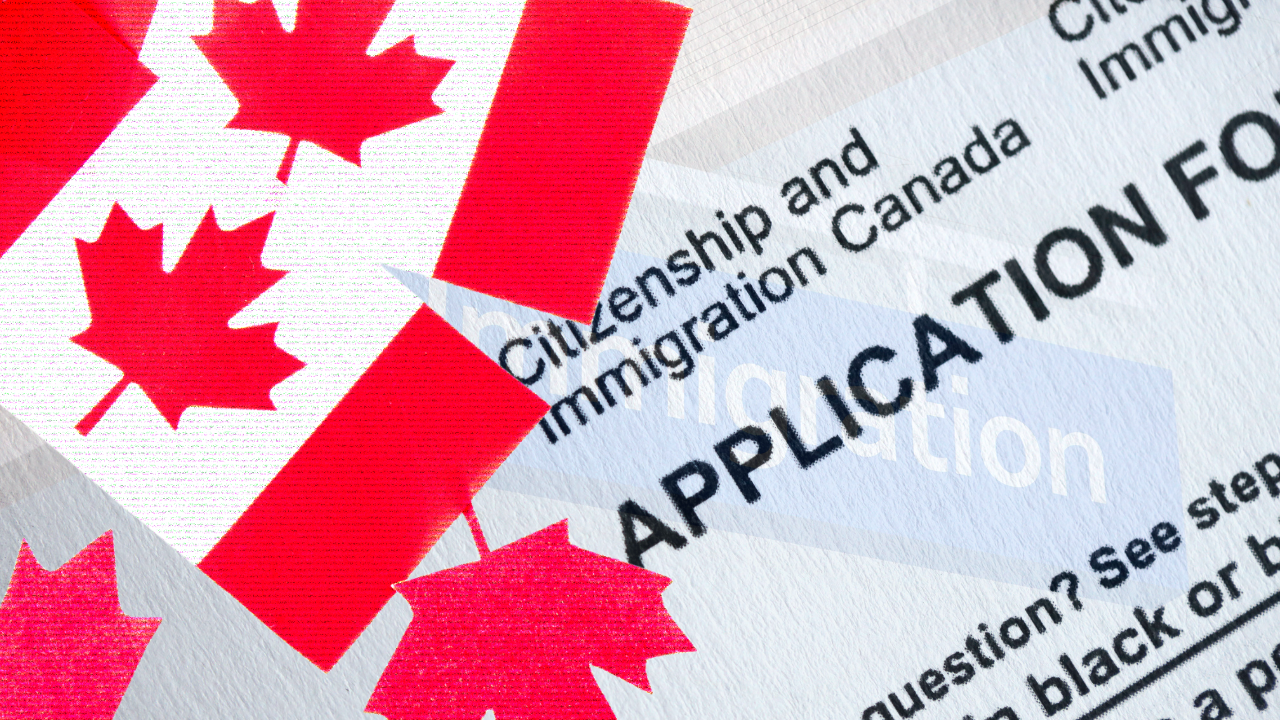
The country that gave us multiculturalism is now showing us how to cut migration and ease the housing crisis. by Nick cater.
If Jim Chalmers’ goal was to provoke a housing slump and simultaneously increase the cost of renting, his 2026 budget will go down as a rip-roaring success.
Since neither of these objectives featured in his speech on budget night, however, we are drawn to the alarming conclusion that the government has abandoned the discipline of policy formation and is simply making it up as it bumbles along.
This is particularly risky in the housing market, since history shows that sudden shocks in the property sector frequently trigger recessions. An International Monetary Fund study of 122 recessions found that the housing market was the epicentre of a quarter of them. In most cases, the shocks were caused by non-market forces – that is, government intervention.
You don’t have to be Milton Friedman to conclude that we’d be in a happier place now if the Albanese administration had decided it would do nothing other than remove red tape and lower and simplify taxes.
Instead, it has thrown a succession of interventions at the market – the Housing Accord, the 1.2 million new homes target, the expanded 5 per cent deposit guarantee, and now changes to negative gearing and capital gains tax – in the hope that something will stick. Some hit the accelerator (cheaper deposits), some slam on the brake (cuts to the CGT discount) and some are simply hot air (the new homes target). Buyers, sellers, investors and developers have responded by sitting on their hands.
It is a different story in Canada, which emerged from the Covid pandemic with remarkably similar problems: surging immigration and a housing shortage.
Canada also has a centre-left government, albeit led by a Prime Minister with considerably more real-world experience than either his predecessor – the hapless Justin Trudeau – or his Australian counterpart, whom he visited in Canberra in March. Who knows what they discussed behind closed doors, but the official communique gives us a flavour of the discussions: “Leaders acknowledged the Ngunnawal people as Traditional Custodians of the lands … Leaders recognised the shared values underpinning the close partnership … parliamentary democracy, multiculturalism …”
Multiculturalism ranks alongside five-pin bowling, poutine and Justin Bieber as one of Canada’s least helpful contributions to the world. It was adopted in Canada around the time Coca-Cola launched its “I’d like to teach the world to sing” campaign, with a similar spirit of earnest but incurious optimism. Over the course of half a century, the saccharine sentimentality of multiculturalism hardened into the doctrine of diversity among the fruitcake theorists on the progressive left and in Labor’s policy platform.
“We recognise Australia’s diversity is our greatest strength,” it reads. Labor will “seek to develop policies and make decisions informed by an envelope-based understanding of the needs of different Australians”.
Did the authors of this document even try to contemplate the downside of diversity and attempt to measure the trade-offs? Almost certainly not. As Thomas Sowell observed: “It is scary how easily so many people can be brainwashed by sheer repetition of a word.” The diversity imperative is distorting Labor’s thinking on immigration just as the White Australia policy did in the 1960s, and for essentially the same reason. Theoretical arguments about the ethnic composition of Australia have clouded practical decisions about the quantity and quality of our migration intake.
Linking the housing shortage to the unprecedented number of migrants admitted since Covid has become taboo among the Labor intelligentsia. In April, junior Treasury minister Andrew Leigh wrote this in the Australian Financial Review: blaming migrants for a housing shortage was “a populist manoeuvre”. On housing, he wrote that “migrants aren’t the culprits”, “In fact, they’re often part of the solution.”
Carney, a former central bank governor who studied alongside Angus Taylor at Oxford, takes a different view. His strategy, released in 2024, stipulates that immigration needed to be matched to Canada’s “capacity to build new homes” and that the objective was to “balance housing supply with housing demand”. Canada reduced planned permanent migration from the previous trajectory of 500,000 a year to 395,000 in 2025, 380,000 in 2026 and 365,000 in 2027, while also introducing targets for temporary migration for the first time. The previous target of 673,650 new temporary residents in 2025 was roughly halved to 385,000 in 2026 and 370,000 in 2027, as were student arrivals, which were cut to 155,000 in 2026, down from 305,000.
The changes to the housing market have been startling. The Canada Mortgage and Housing Corporation reported in July that slow population growth was weakening housing demand. Vacancy rates were rising in a number of cities and rent growth was slowing.
The heat had been taken out of the property market, and prices were beginning to drop in some cities, though not as sharply or as erratically as in Australia. It is too early to tell whether Carney’s incentives to build new housing stock in close co-operation with provincial governments will work. Yet by slamming on the brakes for temporary migration and prioritising migrants with useful skills, Carney is correcting the imbalance between supply and demand in the housing market.
Albanese, on the other hand, is frozen in the headlights, without a coherent housing policy and an immigration policy that remains in flux. Reports at the weekend suggest Albanese has been spooked by predictions that cutting immigration will push the country into recession. He’s also nervous about taking on the commercial vested interests of the university sector by capping overseas student numbers and removing the links between student visas and permanent migration.
Neither can we gloss over the PM’s vanity as a constraint on rational housing and migration policy. The suspicion that Albanese has succumbed to a particularly strong form of hubris – an occupational hazard political leaders should guard against – has been confirmed over the last fortnight with “Melon-gate”. The entire executive government, including its most fervent feminists, has been absorbed in attempting to impose a benign interpretation on the PM’s lewd hand gestures.
Albanese’s strongest objection to linking housing policy to immigration may be that Taylor called for it first and that Albanese’s authority will be further diminished by tacitly admitting it is a sensible idea.
Either way, housing and immigration are shaping up to be perhaps the biggest test of leadership and character in Albanese’s prime ministership. Correcting course requires the courage to confront vested interests both inside and outside his own party, and correct the mistakes made in Jim Chalmers’ May budget.
It will require taking a firm position based on economic principles and inner conviction, the kind of leadership we last saw in a Labor government under Hawke and Keating.
It’s a leadership style that has been conspicuously absent in this government. Yet the experience in Canada suggests it has not entirely been extinguished, even on the left.