
A government of tax scavengers
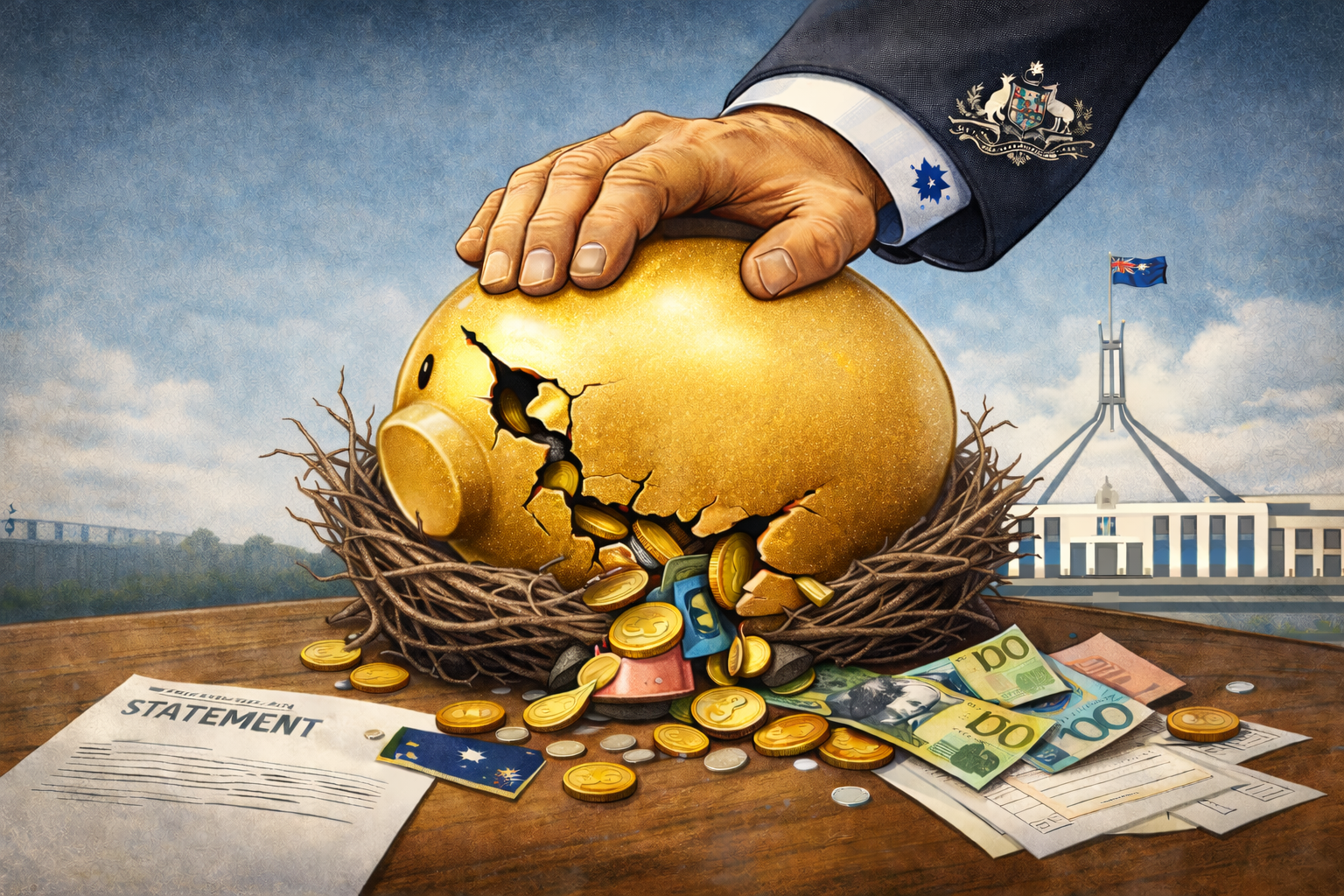
the government is using the cover of intergenenrational equity to justify a raid on australians’ retirement savings. by Nick cater.
When Jim Chalmers flags tax reform as the theme of his forthcoming budget, which part of the government’s grasping revenue machine does he intend to improve?
We’ve heard nothing to suggest he wants to make it simpler. There’s no hint that he intends to remove the anomalies and disincentives that prevent individuals and businesses from thriving.
Indeed, there’s precious little evidence to suggest he intends to reform anything in the literal sense of the word. Instead, his chief and probably only intention is to raise more money to buy goodies to hand out to others in the hope of being re-elected – the one thing the government is genuinely passionate about.
Hence, there is no need for detailed economic modelling or extensive consultations. The only calculations the government is likely to make before removing the 27-year-old concessions on capital gains tax will be political. The noble art of reform as practised by substantial governments is invoked as a rhetorical cover for a sordid tax grab.
Labor has revived the politics of envy to persuade us the capital returns from years of sacrificial investment are windfall gains that must be balanced against the windfall losses of others.
It wants us to believe 2.3 million taxpayers, who have gone to the expense of buying and letting investment property, are greedy and unscrupulous landlords stockpiling homes that could be purchased by others. The countless hours spent finding a plumber to fix a broken sink or a tradie to fix a leaking roof without being ripped off are unworthy of reward in this zero-sum game. The secondary effects of this kneejerk policy are ignored. Homes relinquished by investors could conceivably lower property prices at the margins, but it will reduce the stock or rental property leading to a corresponding increase in rents.
Envy used to sit at number four sandwiched between lust and gluttony on the list of the seven deadliest sins. The Albanese government wants to turn it into a virtue by rebranding it as intergenerational equity, the catchcry of the new class war.
Like the old class war, intergenerational equity is a false war, pitching contrived categories of people against one another in a contest for a fixed quantity of resources. From this standpoint, baby boomers are the 21st-century bourgeoisie, merchants and property owners who have gained illicit control of the cultural, social and financial capital.
The new peasantry – gen Z and millennials – have been condemned to work solely for their own subsistence, according to this fatalistic narrative. They have been impoverished by exorbitant rents extorted by the landlord class, with no earthly chance of rising above their status without the government’s benign intervention.
Nominating beneficiaries of social justice measures by class rather than by individual circumstances is fraught with complications that inevitably result in new injustices. Consider the Albanese government’s attempt to address intergenerational injustice by paying off debts willingly incurred by students in pursuit of the presumed advantages of higher education. It meant that taxes paid by a 65-year-old bricklayer living in rented accommodation, with nothing more to look forward to than a state pension, could end up bailing out young lawyers or merchant bankers who, unlike the brickie, may well have had access to the bank of mum and dad.
Yet we are deterred from dwelling on these regressive anomalies by the moral force of the social justice argument. To reject the framing of intergenerational equity is to favour inequity, which in today’s unthinking climate is a sin.
To recognise how unserious our government has become, we need only cast our minds back a little over a quarter of a century to the lasting reforms that introduced CGT concessions in the first place. The change emerged from the Ralph Review of Business Taxation in 1999, part of a broader attempt by the Howard government to widen the tax base to make it fair, efficient and less distortionary. Nine taxes were abolished and one, the GST, was introduced. Company and income taxes were lowered.
Many strong economic minds devoted much time to ensuring the reforms were right, and they achieved the higher aims of making Australia internationally competitive, friendly to investors and encouraging to would-be savers. The details were vigorously debated in serious newspapers, including the Australian Financial Review, which supported the measures, urging Treasurer Peter Costello to reform faster and harder.
The Howard-Costello encouragement to mums and dads to invest in shares and property as a means of accumulating a nest egg for retirement was spectacularly successful. Together with compulsory superannuation savings, they have given many who once would have fallen back on the state pension the dignity of paying their own way in retirement.
The reforms created a culture of aspiration, encouraging people of meagre means to save in the hope of being better off tomorrow. Their frugality contributed to the investment that stimulated growth and prosperity. The trillions of dollars sitting in superannuation, pension accounts or tied up in property represent wealth that was created, not plundered.
Twenty years ago, the Fin would have got that. Today it has simply fallen for the spin, parroting the government’s line that the 50 per cent tax discount would “cost” the government $247bn in forgone revenue, as if all our private funds belonged to the government except those it charitably allows us to keep. It recently editorialised about the “unequal distribution of the tax burden” that made “the status quo unsustainable”. Scaling back the CGT discount was “worthy of serious consideration”, it argued.
So this is what it has come to in the post-serious age. Un-serious journalists, poorly educated in economics or the delicate art of policy-making, urging an insubstantial government to continue on its merry way, scavenging the last rotting fruit from the reforms of the late 20th century to invest in its splendid vision of a just society.
Meanwhile, a much-diminished conservative opposition, frightened of its own shadow, stages vaudeville entertainment during sitting weeks, thus ensuring no serious analysis of this shoddy government will ever be published or broadcast. For anyone given to conspiracy theories, it would be easy to believe they’re all in on this – the executive, the opposition and the fourth estate – working together to eliminate the last traces of aspiration from this country.
If the Liberal Party is to survive, it must resist the siren song of the government’s contrived narrative and advocate tax reform that encourages enterprise and engenders hope. The message from the dismal poll numbers is clear: Australians want a reforming alternative to Labor’s economic strategy of managed decline.